



Description
Tagelharpa Bastarda in Walnut wood: Characteristics
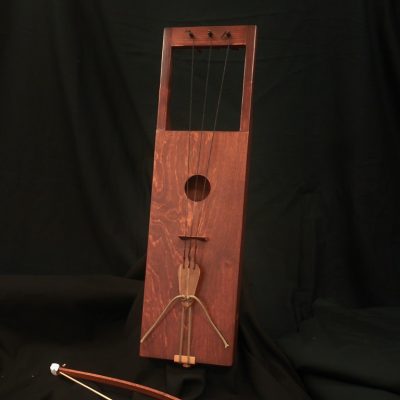
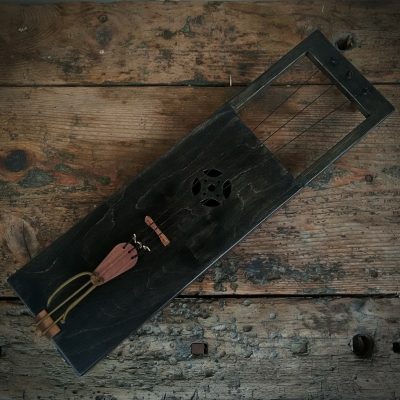
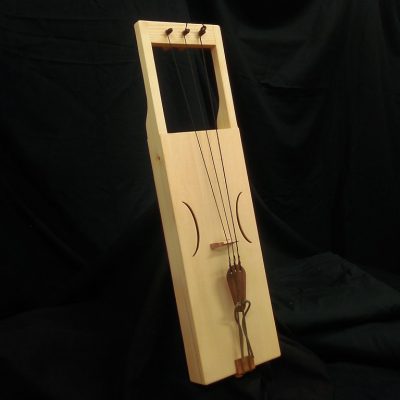
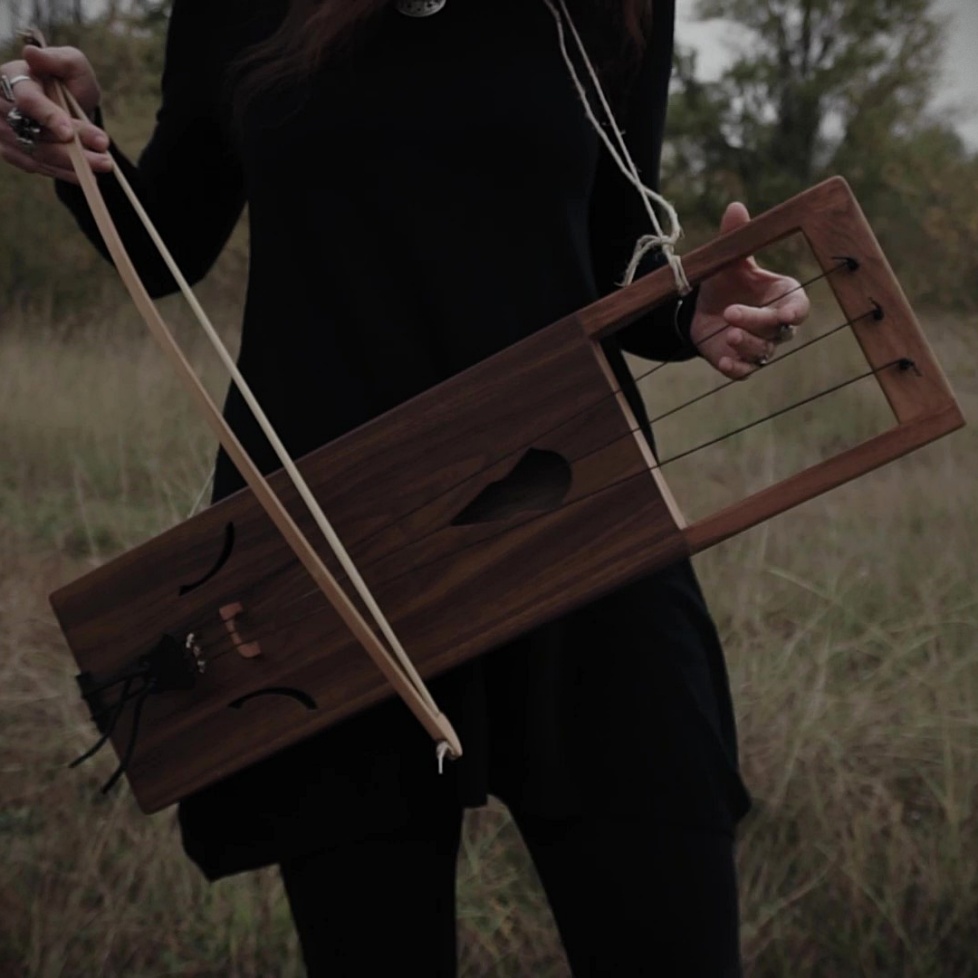
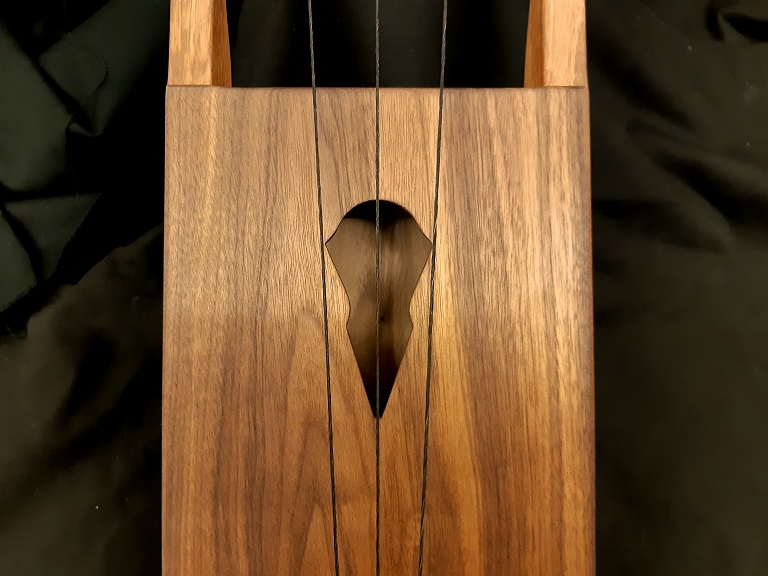
Tagelharpa Bastarda in Walnut. The structure of the instrument, including the soundboard, is entirely made of solid walnut, as are the bridge, tailpiece and pegs, made one by one individually.
Finally, the lyre is finished with cooked linseed oil.
The strings are made of black horsehair, carefully selected, compounds in different number for melodic string, high drone (bordone alto) and low drone (bordone basso).
The bow is made of national walnut, with blond horsehair.
Tuning:
The strings of the Tagelharpa Bastarda can be tuned:
Melodic string: from F# (185 Hz) to A (220 Hz)
High Drone: F# (185 Hz) to A (220 Hz) (unison with the melodic string)
Low Drone: from C# (138 Hz) to E (164 Hz)
History
The Tagelharpa (also called Talharpa) is a bowed lyre orgined in northern Europe. It spread widely in Scandinavia after the Viking age and is still used in some of the northern territories (of particular importance the tradition of the Estonian islands). Its existence in medieval Scandinavia is witnessed by artistic and archaeological sources, such as the wall painting in Røldal (XII-XIII century) and the sculpture of Trondheim Cathedral (XIV century). Also widely spread its close Finnish relative, the Jouhikko.