Description
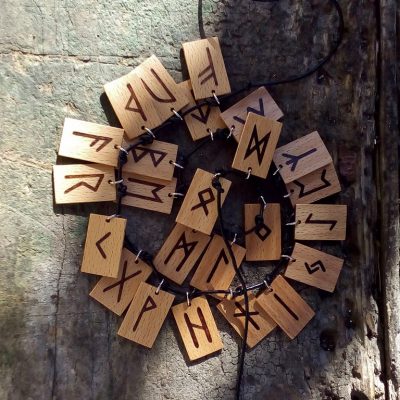
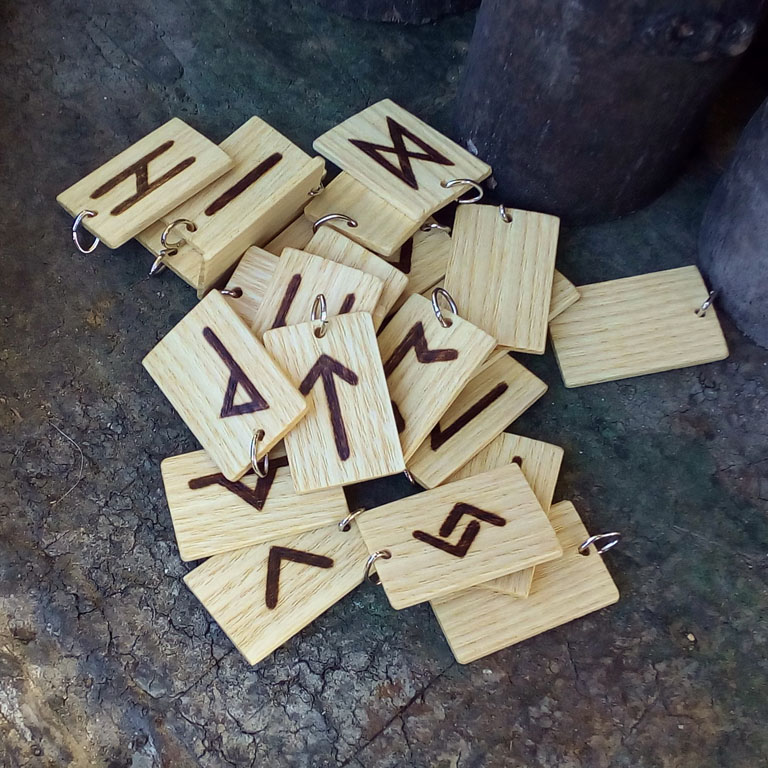
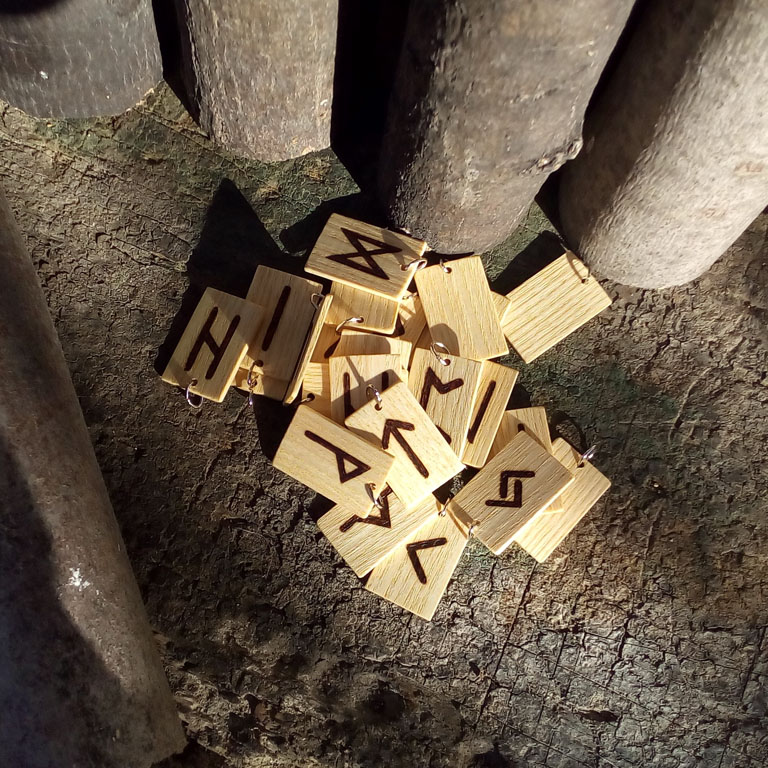
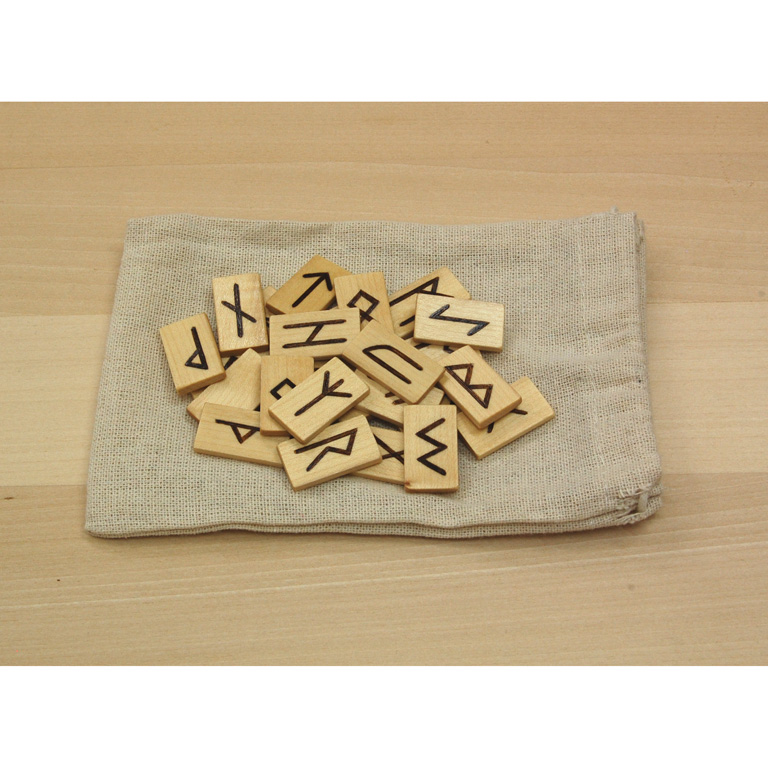
Rune Pendants Ash:
The runes of the ancient alphabet (elder futhark) Are alphabetic signs used by the northern Germanic peoples as early as the II century A.D.
Runes of the ancient alphabet (elder futhark) are alphabetical signsused by nordic germanic peoples as early as II century A.D.
In several attestations, it is explicity stated the supernatural power and, even it is an authentic alphabet, they were used only in dedications, statements of possession and magical inscriptions. Not only the words but specially the runes itself were considered holders of magical power, a such strong power that they were engraved individually on amulets or combined to create apparently non-sense words. Every Rune has a name, a personality, a role and a meaning. To conquer the Runes knowledge and secrets, Odin sacrificed himself by hunging nine days and nine nights at the ash Yggdrasil, hurt by his spear, to pass through death:
I trow I hung on that windy Tree,
nine whole days and nights, stabbed with a spear,
offered to Odin, myself to mine own self given,
high on that Tree of which none hath heard
from what roots it rises to heaven.
"None refreshed me ever with food or drink,
I peered right down in the deep; crying aloud I lifted the Runes,
then back I fell from thence."
(Hávamál,The Words of Odin the High One)
About the incredible power of the Rune, Odin itself is a witness (Hávamál):
"A twelfth I know:
if I see in a tree a corpse from a halter hanging,
such spells I write, and paint in runes,
that the being descends and speaks."
Divination and Magic:
That Germanic peoples practiced divination is historically certain; Also Tacitus (De origine et situ Germanorum) describes a ritual where a branch cut down from a tree was cut in stripes, on the stripes were engraved symbols and then people threw them down on a white length of cloth, to pick up three of them and read the response. We don't know if those symbols were Runes, but the magical and evocative nature of the Runes makes them an interesting divination means.
Many are the attestations and literary and archeological ancient records about the use in magic of the Runes, and many are the stories told in northern sagas that describe them and celebrate their power. From Sigrdrífumál (Sigrdrifa's Spell):
"learn Winning-runes,
if thou longest to win, and the runes on thy sword-hilt write;
Some on the furrow, and some on the flat,
And twice shalt thou call on Tyr.
learn Ale-runes,
hat with lies the wife of another betray not thy trust;
On the horn thou shalt write, and the backs of thy hands,
And Need shalt mark on thy nails.
learn Birth-runes,
if help thou wilt lend, the babe from the mother to bring;
On thy palms shalt write them and round thy joints
and ask the fates to aid.
learn Wave-runes,
if well thou wouldst shelter the sail-steeds out on the sea;
On the stem shalt thou write, and the steering blade
And burn them into the oars; Though high be the breakers,
and black the waves, Thou shalt safe the harbor seek.
learn Branch-Runes,
if a healer wouldst be, and cure for wounds wouldst work;
On the bark shalt thou write, and on trees that be
With boughs to the eastward bent.
learn Speech-runes,
that none may seek to answer harm with hate;
Well he winds, and weaves them all,
And sets them side by side, at the judgment-place,
when justice there the folk shall fairly win.
learn Thought-runes,
if all shall think thou art keenest minded of men;
he understood, he engraved them,
Odin took them from the liquid
from the lymph which fell from Heiðdraupnir's head
and from the horn of Hoddrofnir. "
“Haidz runo runu, falh’k hedra ginnarunaz. Argiu hermalausz, … weladauþe, saz þat brytz.”
I, master of the runes hid here runes of power. Incessantly (plagued by) maleficence, (doomed to) insidious death (is) the one who destroys this (monument).
Runestone by Bjørketorp, 6th-7th century. p.C.n., Sweden.
<<< Back to the category: original plates, panels and creations